Semi-Arid Grassland Research Center






Ecovoltaic Research Facility
Welcome to the Ecovoltaic Research Facility, a collaborative project by Sandbox Solar, Colorado State University, and other partners. This grant-funded agrivoltaic initiative explores the integration of solar energy and ecological preservation through raised photovoltaic arrays. By studying their effects on forage performance, soil moisture, and energy production, the project aims to advance responsible ecological services throughout the solar development process.

Single-Axis-Tracker
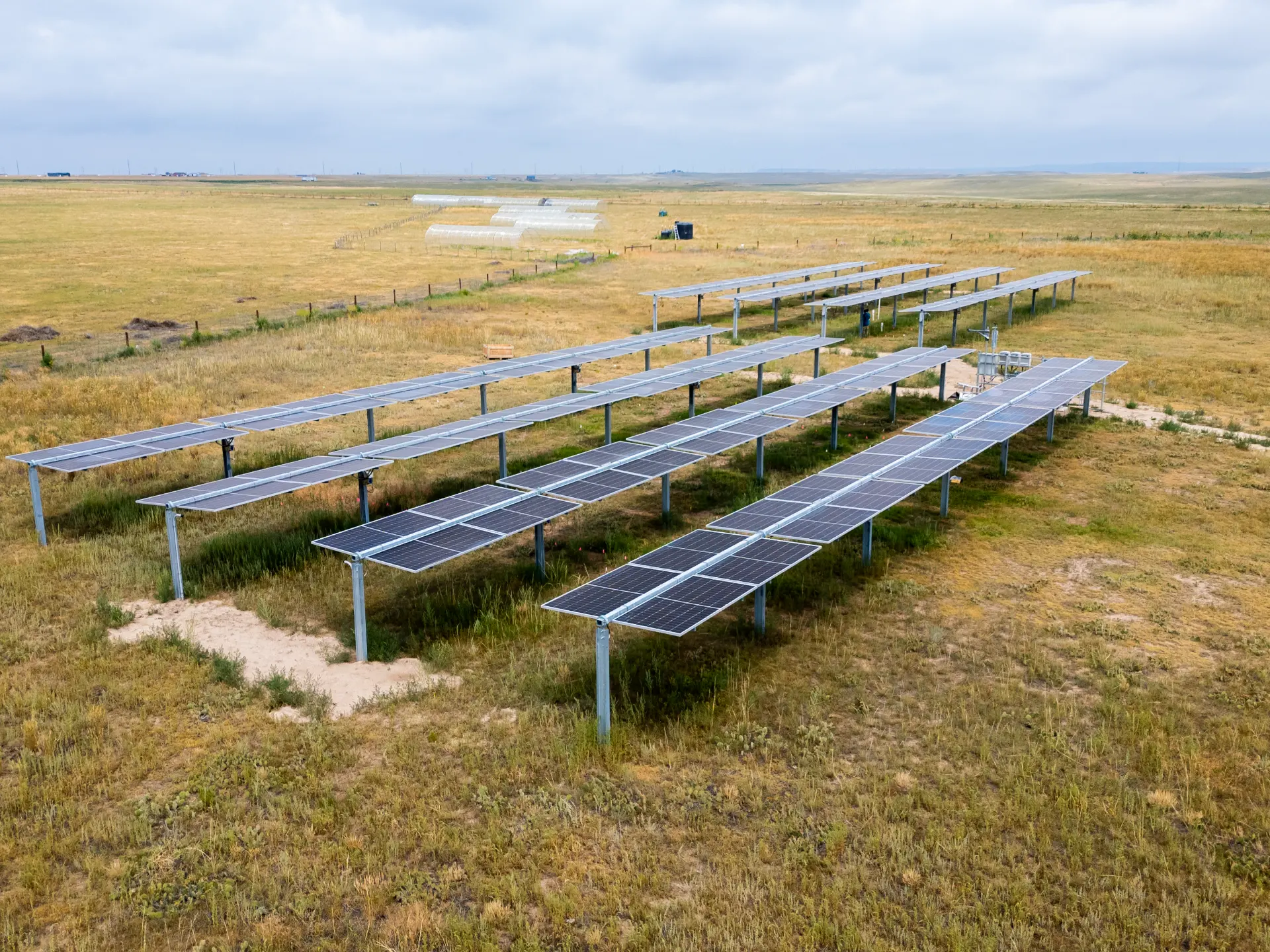
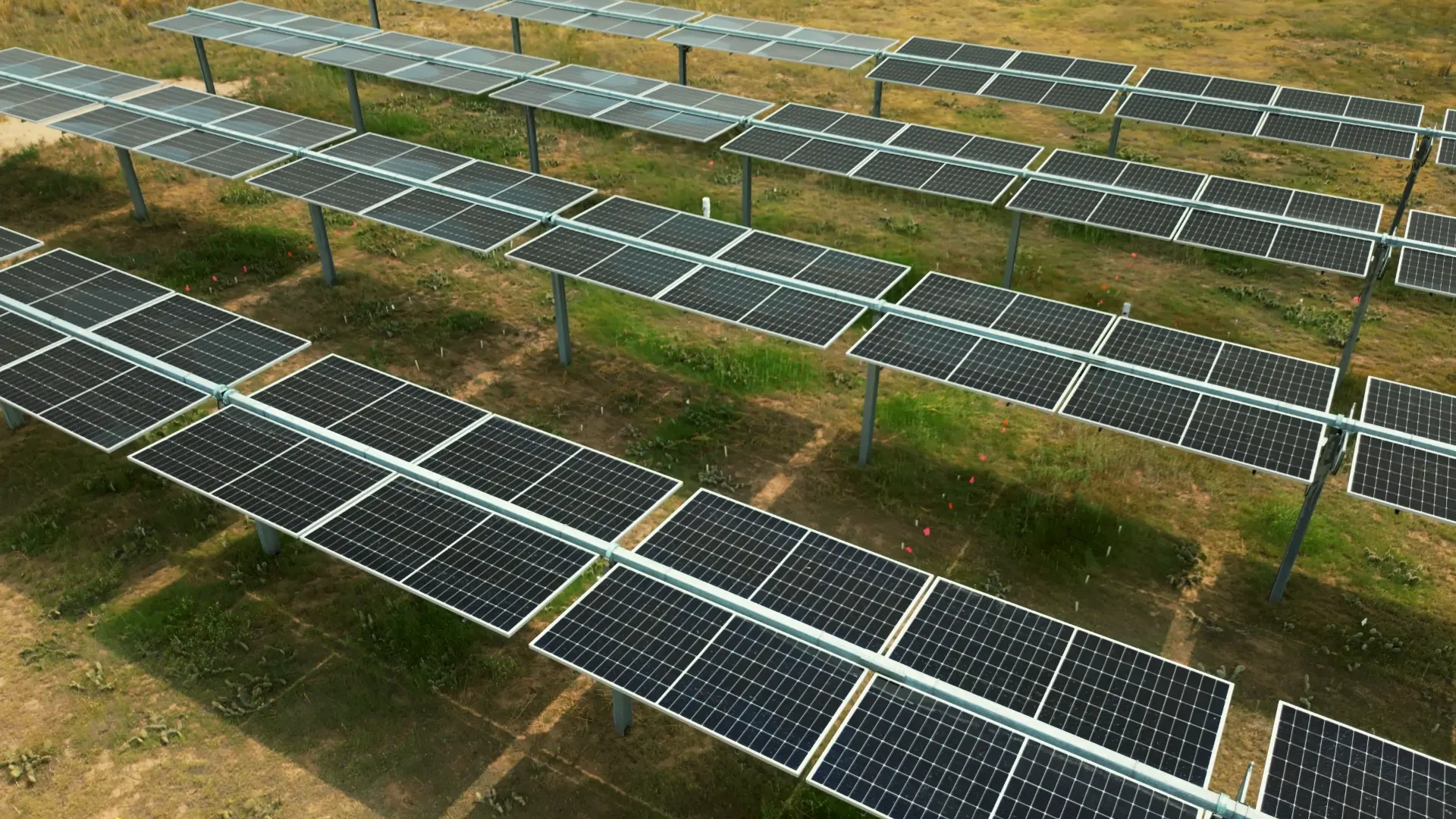
At the Ecovoltaic Research Facility, bifacial solar panels have been installed to study the effects and production of the solar panels and native forages underneath them. This array features SolarGik single-axis-trackers that follow the sun east to west throughout the day, maximizing energy production. The use of Single-Axis-Trackers allows the research to extend its insights across the utility-scale solar industry. This innovative project is exploring how utility-scale solar development is impacting local ecology.
MONTH
0kWh
YEAR
20,318kWh
LIFETIME
22,744kWh
Agrivoltaics as a method for critical ecosystem preservation
Recognizing the challenge of solar expansion competing with valuable agricultural land, Sandbox Solar and Colorado State University are collaborating to research how thoughtful utility-scale solar design, specifically utilizing the ecovoltaics strategy, can simultaneously produce clean energy and enhance American grassland ecosystems.
Modeling and Results
Spade Agrivoltaics Modeling for Ecovoltaics Projects

Irradiance Modeling
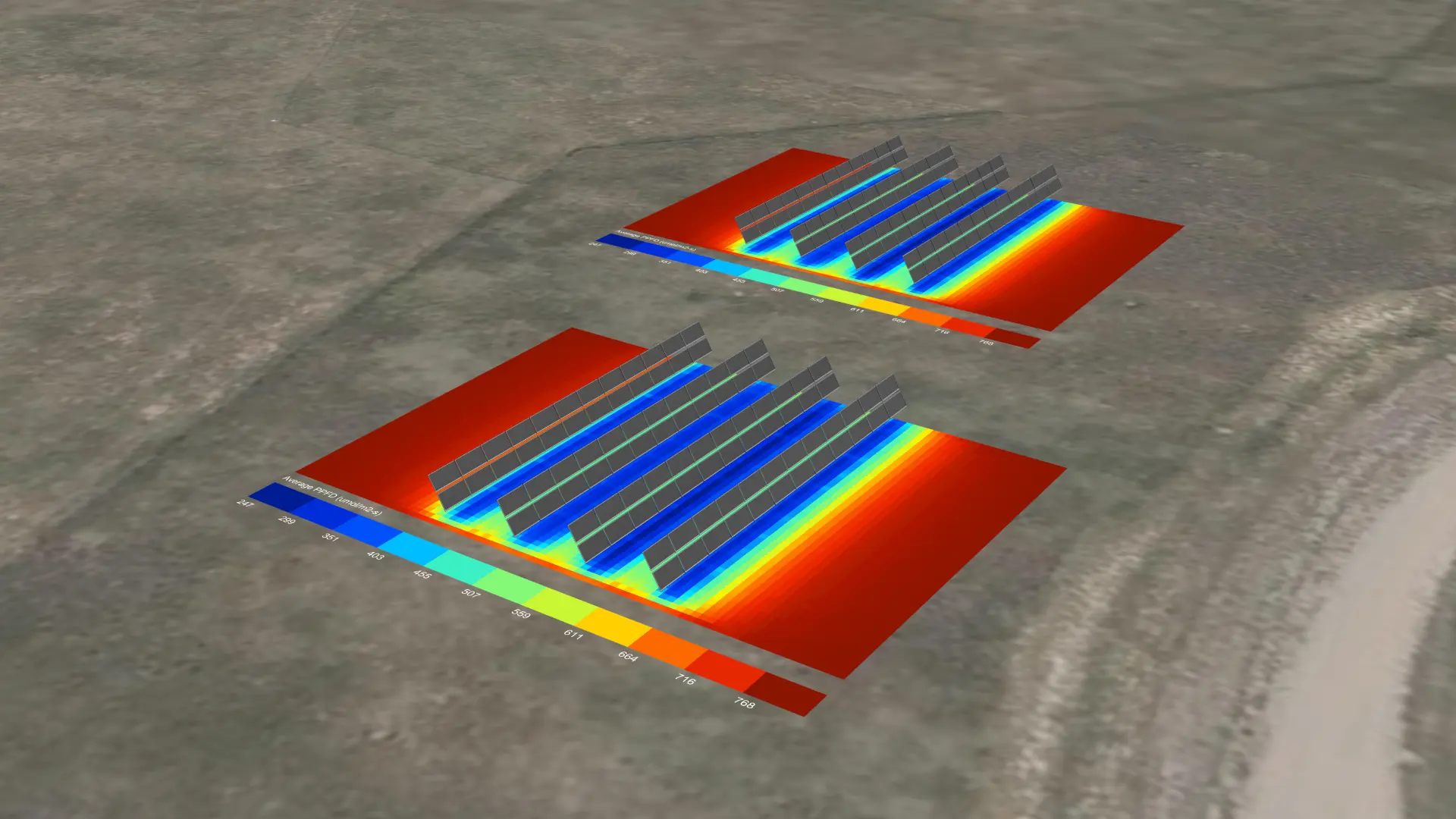
Sandbox+ Solar utilized advanced irradiance modeling via its proprietary Spade Agrivoltaics tool for the ecovoltaics project at Colorado State University’s Semi-Arid Grasslands Research Center in Nunn, Colorado. This software employs ray-tracing algorithms to simulate shade distribution under the 105.6 kW DC bifacial solar array with SolarGik single-axis trackers, precisely calculating ground-level irradiance in W/m². The model provides solar developers with detailed maps to optimize agrivoltaic designs, balancing energy production and land use efficiency.
PPFD & DLI Results
The Spade Agrivoltaics platform further quantified Photosynthetic Photon Flux Density (PPFD in µmol/m²/s) and Daily Light Integral (DLI in mol/m²), revealing maximum light reduction of 69% in shaded areas, just 31% of open-field levels. These agrivoltaics metrics enable predictions of impacts on grassland ecosystems, alfalfa crop yields, soil moisture retention, and microclimate shifts in dual-use solar farms.