Agrivoltaics in Colorado: Why and How?
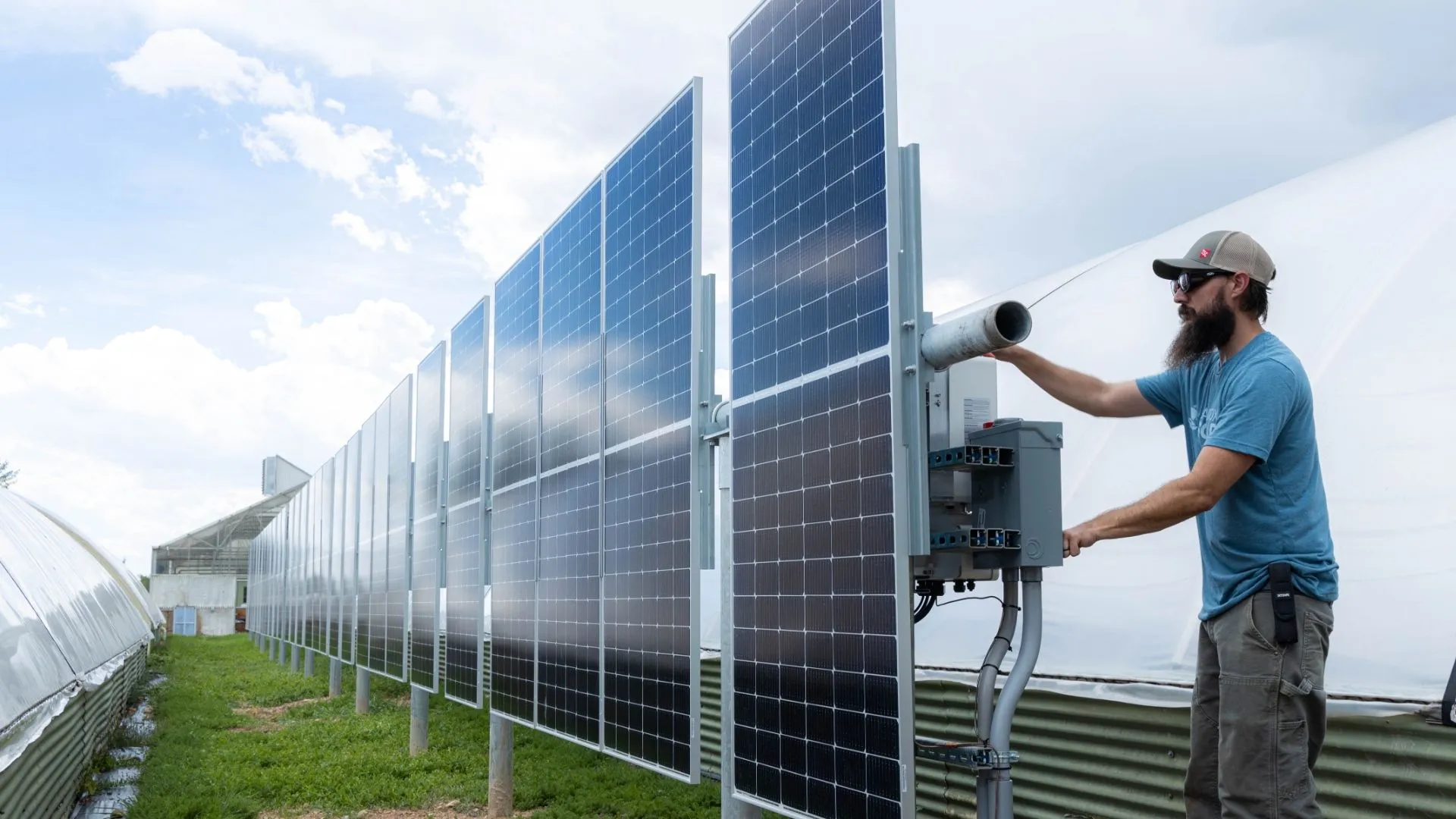
Agrivoltaics, the co-location of agriculture and solar energy, has seen a major increase in adoption throughout the state of Colorado in recent years. Passionate practitioners have pushed this technology from concept to reality in recent years. At Sandbox+ Solar, we are proud to be active in such a dedicated community. As the best solar installers in Northern Colorado, our teams are passionate about being innovators in the industry to make self-sufficiency a standard throughout the state.
Why Agrivoltaics?
Agrivoltaics holds many benefits for agricultural operations across the board. For Colorado, the primary driver is the conservation of water resources. According to Colorado State University Extension, Colorado experiences drought “nearly nine out of every ten years.” Agrivoltaics preserves this precious resource through the provision of shade. Utilizing strategic amounts of shade helps plants retain moisture through decreased evapotranspiration (plants ‘exhaling’ water through the photosynthetic process). Research has supported this, particularly regarding forages and native grass species. Read more about it here!

The Impact on Cattle
Understanding that 70% of Colorado’s agricultural economy relies on cattle revenue, many are shifting their focus from cropping systems and the standard sheep grazing to the co-location of cattle grazing underneath these systems. Dairies are an obvious starting point, having a large baseload (high energy usage throughout the day), makes them an ideal case. Research from the University of Minnesota has shown that ground-mounted arrays co-located with pasture-fed dairy operations help with heat abatement for cattle, further increasing weight gain, improving milk quality, and reducing the amount of water needed. These results can extend beyond dairy cows and to pasture-fed cattle as well.

Noteworthy Projects in the State
Jack’s Solar Garden
A primary example of agrivoltaics in Colorado is Jack’s Solar Garden. Since 1972, the family had been growing hay and wheat which are staples in the Colorado agricultural industry. In 2019, the current owner and operator, Byron Kominek, took a hard look at his operations. Across all 24 acres, the tried and true method of haying was no longer stable. With hay becoming less and less economically viable, Byron had to make a change.
Inspired by local research institutes: CSU and NLR (formerly NREL), Byron decided to go all in on agrivoltaics. Now entering the 6th year of operations, Jack’s Solar Garden hosts a diversified vegetable farm, conducts agrivoltaic research with CSU, NLR, and ASU, as well as hosting farm tours and events through the non-profit Colorado Agrivoltaic Learning Center.
Western Research Center
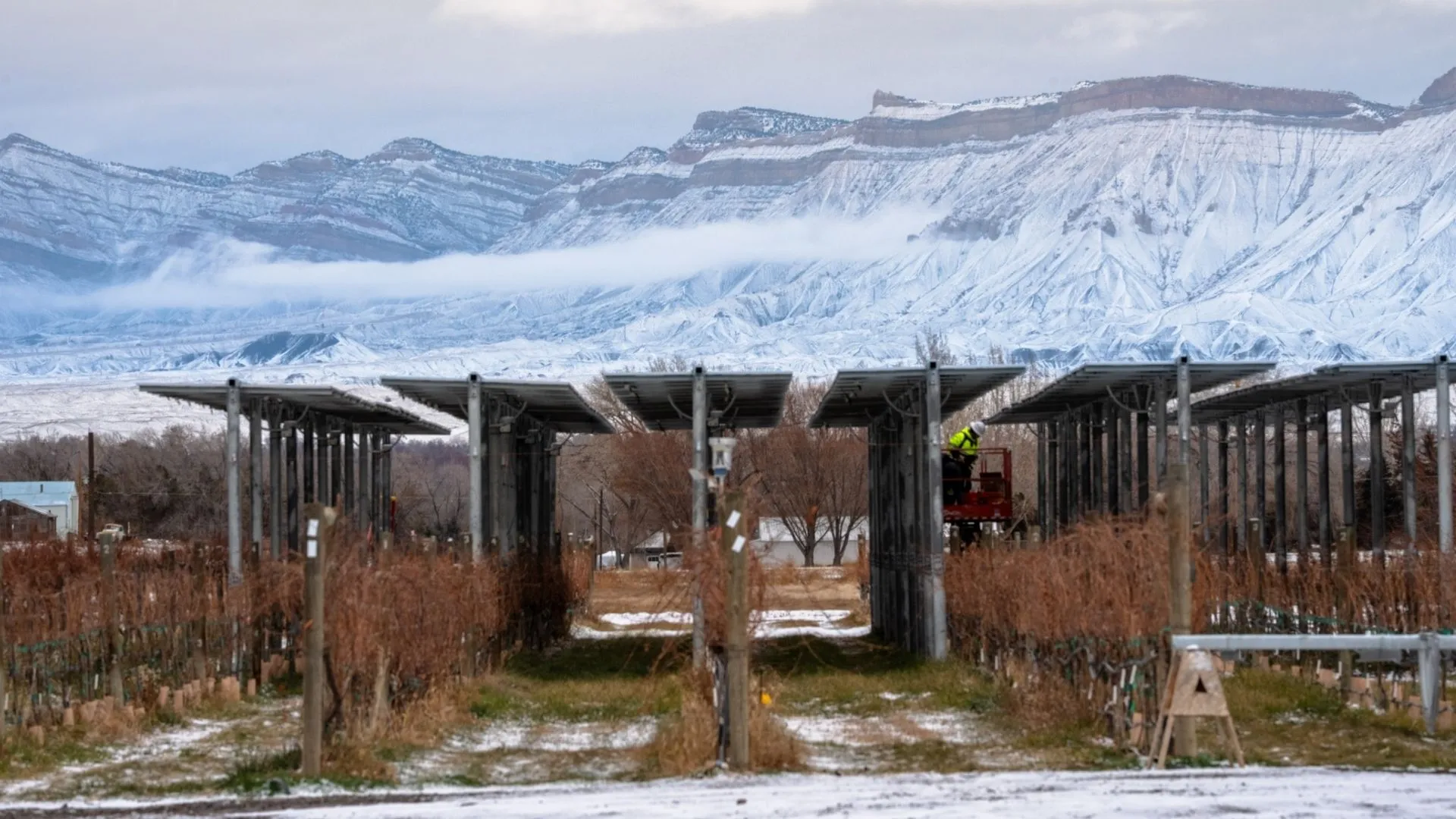
Recently, our solar installers had the opportunity to design and construct a novel, first-of-its-kind agrivoltaic array for Colorado State University. Located along the western slope of Colorado, at the Western Research Center, we installed a 14-foot-tall solar array above an active Chardonnay vineyard. Dr. Horst Caspari, Colorado’s State Viticulturalist, wanted to explore how agrivoltaics can integrate within existing vineyards.
Aside from the extraordinary accommodations that were required for a 14-foot-tall structure, we were proud to take extreme care of the agricultural land we were working on. This array features both bifacial panels, able to capture light from both the front and back sides of the panel, as well as semi-transparent panels, which allow for approximately 50% of the light to be used for electricity generation while the other 50% passes through to the plant’s canopy.
Native Hill Farms
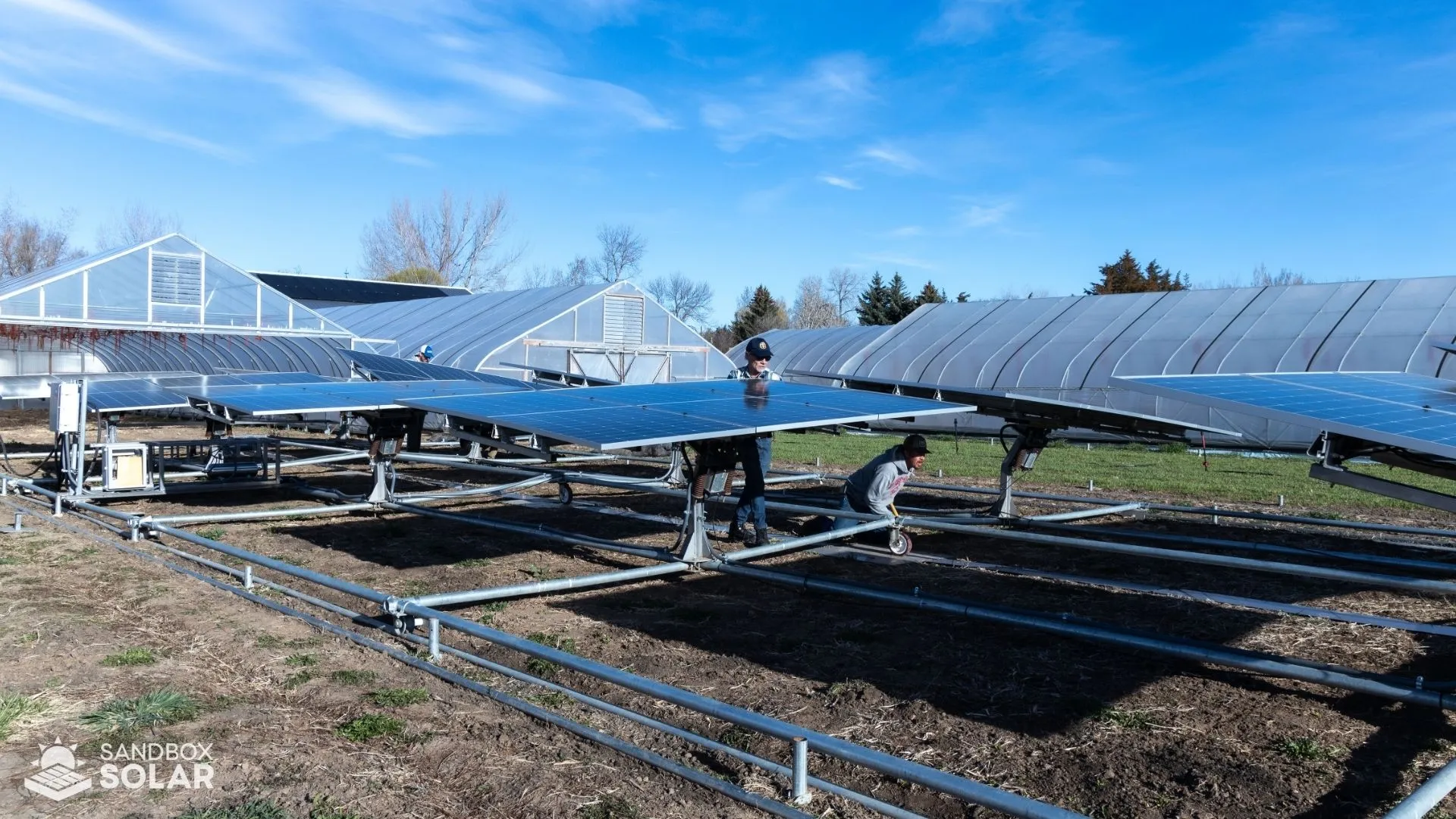
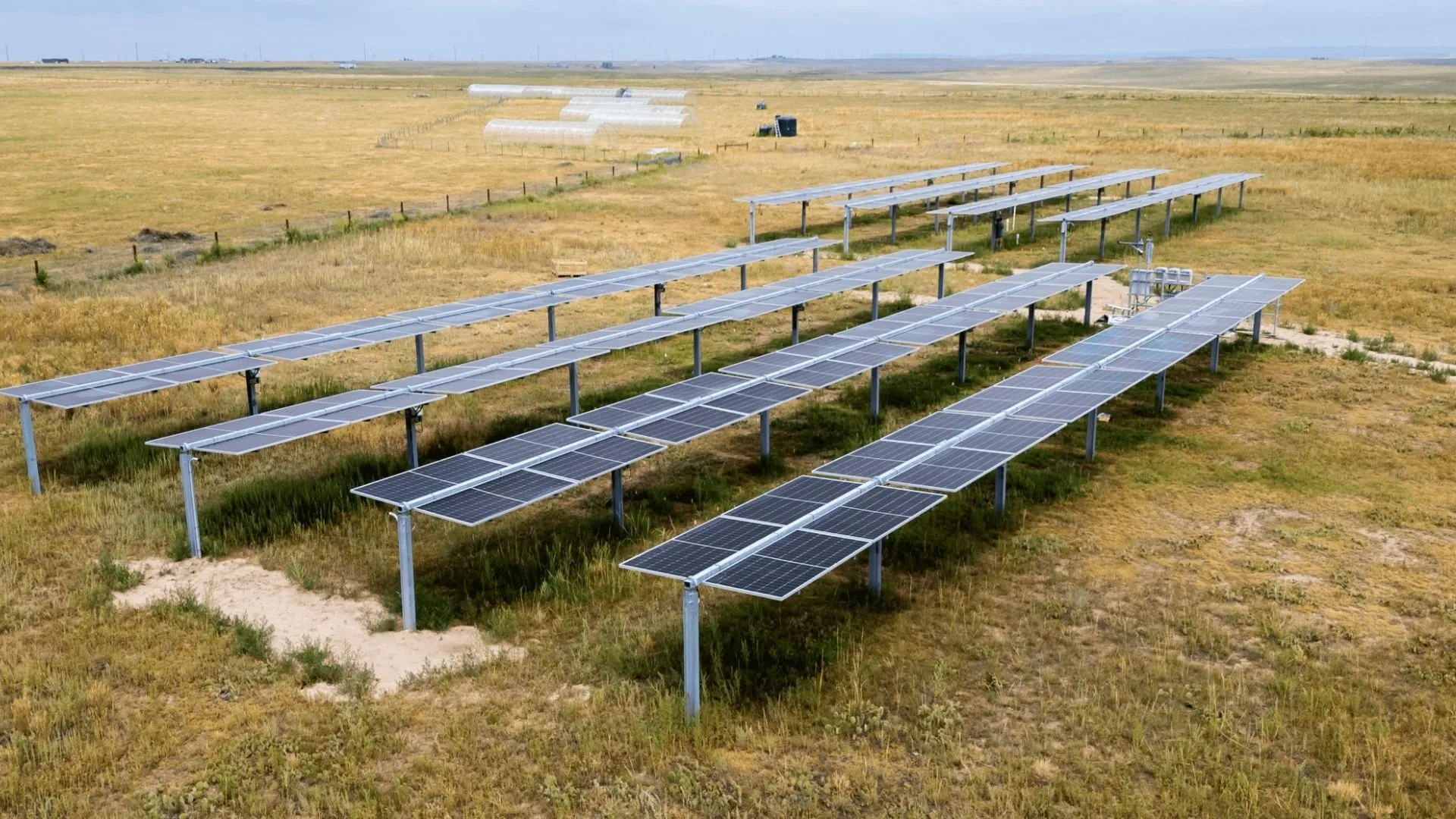
Aside from research applications, agrivoltaics holds immense benefits for locally owned operations. Here in Fort Collins at Native Hill Farms, we installed an interoperable 16kW mobile agrivoltaic solar array. The farm operators desired to power their operations using solar energy, yet lacked enough viable roof space to meet their needs. Rather than taking land out of production, we explored unique land use opportunities.
Seeing mobile greenhouses on site, which allow for crop rotations and soils to rest, we saw a huge opportunity. What if we could install solar panels over the resting plots and then relocate the array when those plots are ready to be cultivated again? The idea, wild. The result, a product that not only works but outperforms.
We contacted Advanced Manufacturing Technologies, a local manufacturing company in Northern Colorado, to help design and engineer the racking structure for this project. In practice, the small team can move this solar array between plots when needed. For the operation, they were able to transition toward better and greener practices without sacrificing productive land.
To learn more about the diverse swath of agrivoltaic projects across Colorado and the United States, find the InSPIRE Map created by NLR.
Agrivoltaic Success in Our State
The success of agrivoltaics across Colorado comes from a diverse network of companies and individuals dedicated to this cause. Colorado State University has been exploring agrivoltaics across horticulture, agronomy, and animal sciences. The National Lab of the Rockies (formerly NREL) has been conducting agrivoltaic research since 2010 and hosts a site at their facility. Jack’s Solar Garden has gained worldwide attention and has grown a dedicated non-profit to the cause, the Colorado Agrivoltaic Learning Center.
Incentives for Agrivoltaics
Beyond these research institutions, several incentives have been available to producers and researchers. Formerly, the USDA supported agrivoltaic development through the Rural Energy for America Program (REAP) Grant, although no longer, this program accelerated the agrivoltaic industry to where it is today. Farmers and solar professionals alike will understand the instability of federal support, yet state policy and incentives can make up for what is lost at the federal level.
The Colorado Department of Agriculture supports two grant funds, the Agrivoltaic Research & Development Grant and the ACRE3 (Advancing Colorado’s Renewable Energy and Energy Efficiency) Grant. Both of these opportunities support the research and continued development of agrivoltaics across Colorado.

How can I explore agrivoltaics?
To begin the discussion around agrivoltaics for your operation, we can start by asking one simple yet important question: Do you want to produce energy for yourself or the community?
This breaks down the agrivoltaic development into two categories:
- Behind-The-Meter (BTM) Solar: If your energy consumption is large (>$5000/annually), then this presents as a good option. In this case, energy generated on-site is used on-site, directly offsetting utility bills. This case pairs excellently with battery storage, keeping operations running during power outages, which are becoming increasingly common in Colorado.
- In-Front-Of-The-Meter (FTM) Solar: If your energy consumption is medium to low, a ground-mounted solar array may not be the most viable option. But you may want to still extend the benefits of agrivoltaics to your operation. You may want to explore FTM solar. In this approach, we cover your agricultural area in agricultural-friendly solar layouts that produce large amounts of energy. The energy is sold back to the grid through utility agreements or to the local community through community subscriptions. Despite the actual sale of energy, this method extends agrivoltaic benefits across your entire operation. Additionally, this approach offers farmers an additional revenue source through annual lease payments.
Reach Out If You’re Considering Agrivoltaics
Interested in learning more about agrivoltaics? Our friendly team of solar installers in Northern Colorado can provide no-cost, no-sweat evaluations for your agricultural operation.