LOCAL COLORADO ENERGY EXPERTS
SMARTER HVAC POWERED BY SOLAR ENERGY
Combine high-efficiency electric HVAC with solar and battery storage to reduce energy costs, increase self-sufficiency, and take greater control of your home’s energy use.
Why make the switch
POWER YOUR COMFORT WITH THE SUN
Modern heat pumps make it possible to heat and cool your home efficiently with electricity, while solar helps generate the power they need. Designed together, HVAC and solar can reduce reliance on traditional fuels, lower long-term energy costs, and create a more efficient, resilient home energy system.
LOWER YOUR ENERGY DEPENDENCE
Pairing an efficient heat pump with solar allows more of your heating and cooling energy to come from electricity generated at your own property, helping reduce reliance on gas and utility power.
DESIGNED TO WORK TOGETHER
Variable-speed HVAC systems use only the capacity needed to maintain comfort, helping reduce electrical demand and making them a strong match for solar and battery-powered homes.
ONE TEAM, ONE ENERGY PLAN
By designing your HVAC and solar systems together, Sandbox can account for your present and future energy needs from the start, creating a more coordinated and efficient home energy solution.


HOME ENERGY BASICS
WHAT YOU SHOULD KNOW ABOUT HVAC & SOLAR
HOW DO HVAC AND SOLAR WORK TOGETHER?
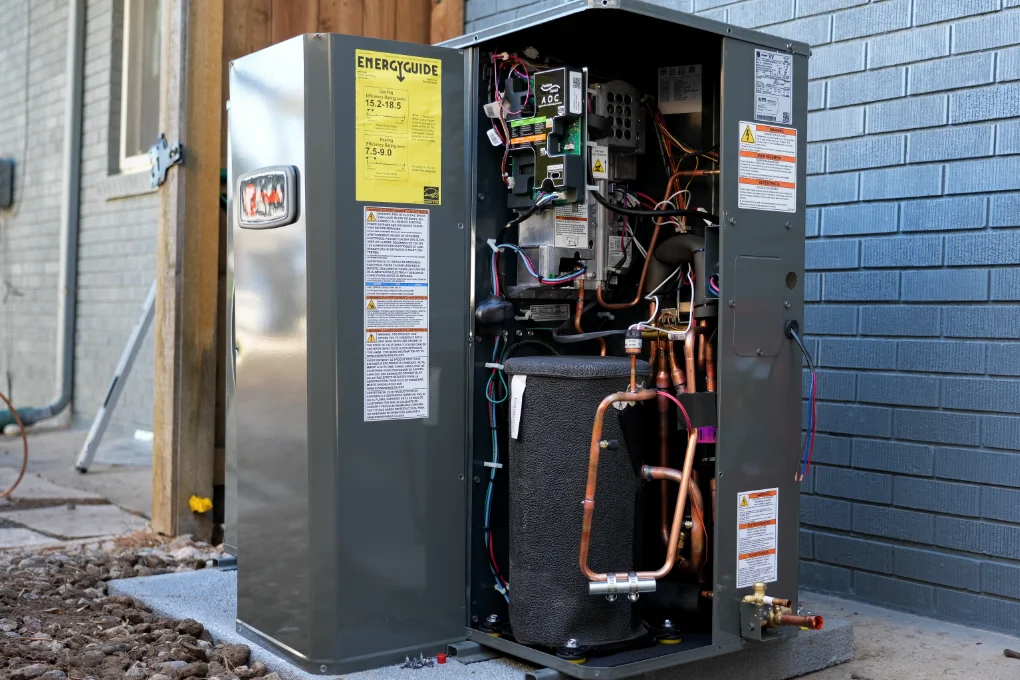
Modern electric heat pumps provide both heating and cooling using electricity instead of relying solely on combustible fuels. When paired with solar panels, a portion of that electricity can be generated directly from your property, helping offset the energy required to keep your home comfortable throughout the year.
Adding battery storage can take the system further by storing excess solar production for use when sunlight is limited or during certain power interruptions. Together, these technologies create a more integrated approach to comfort and home energy management.
WHY DOES HVAC EFFICIENCY MATTER FOR SOLAR?
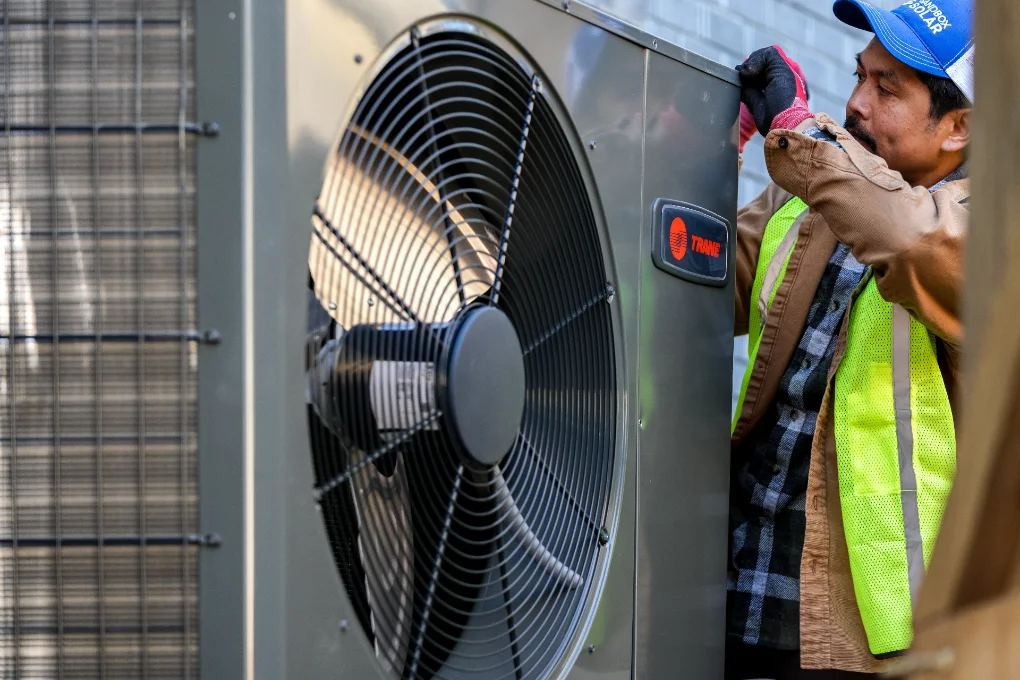
The more efficiently your HVAC system operates, the less electricity your solar system needs to provide. Variable-speed heat pumps and compressors can adjust their output to match your home’s actual heating or cooling demand rather than operating at full capacity every time they turn on.
This lower, more consistent power demand can improve compatibility with solar and battery systems while reducing unnecessary energy use. Proper system sizing, insulation, duct sealing, and other efficiency improvements can reduce demand even further.
IS HVAC & SOLAR RIGHT FOR MY HOME?
HVAC and solar can be a strong combination for homeowners looking to reduce energy costs, electrify more of their home, or become less dependent on traditional utility and fuel sources. Designing the systems together also allows the solar array to account for the electricity your HVAC equipment will require now and in the future.
Every property has different electrical capacity, heating and cooling demands, roof conditions, and energy goals. Our HVAC and solar teams can evaluate the complete picture and recommend a system designed around how your home actually uses energy.

Incentives
Take Advantage of Colorado Solar Incentives and Maximize Your Savings
Save big with HVAC incentives! Federal, state, and local utility rebates can significantly lower the upfront cost of installing a heat pump. Homeowners may also qualify for tax credits that make energy-efficient upgrades like heat pumps more affordable.
FAQs
Frequently Asked HVAC and Solar Integration Questions
What is self-sufficiency in modern HVAC systems?
Properties now have the ability to control the space temperature through all electrical components and can perform both heating and cooling functions without the need for gas. This allows for conditioned areas to not rely on grid-tie power or gas distribution. Heat pump systems can run solely on the use of photovoltaic and battery applications and Sandbox provides pathways for installation of each.
In some models, the backup or auxiliary heating system, through either an electric strip heater or gas furnace, can supply nominal heating capacity during defrost modes. Other heat pump systems can support 100% heating capacity throughout the entire year. Talk with our HVAC professionals to find the system that best aligns with your efficiency goals.
How have modern HVAC systems evolved since their invention?
Commercially available heat pumps were in a work in progress since the early 1900s and have been continuously improved. Modern heat pump systems are reaching efficiencies of up to 400%.
Modern HVAC systems offer full electrification via elimination of gas reliance, utilizing variable-speed compressors (which enhance energy efficiency), leveraging solar and battery systems, and providing greater energy resilience.
Why are variable speed HVAC systems important for solar-powered homes?
Variable speed compressors are able to have a soft start starter approach on startup and has low energy consumption during ramp or ramping up. Traditional HVAC systems heavily rely on high starting capacitance or permanent split capacitor in order to kick start the split phase compressor that is typically reciprocating or scroll type. These split phase motors require a high amount of current in order for the gears to turn over converting into a high Locked Rotor Amp level or LRA when the thermostat calls for the compressor to kick on.
Historically, solar systems favor soft start motor components and lower LRA. Variable speed HVAC systems can satisfy this low-ramp startup application and does not require 100% capacity on every call. Once the space temp has satisfied, the cruise control ability of variable speed compressors only generate the amount of Btu’s required at that current temperature differential or deadband.
What is the role of electrification in HVAC and energy dependency?
Properties have succumbed to being heavily dependent on grid-tie technologies. We finally entered a new era and frontier of fully electrifying thermal envelopes with innovative cold climate HVAC compressors. Since these systems are designed to handle the entire heating and cooling portfolio of a property, they are able to satisfy a call all by electricity. Electrification in the HVAC industry is a game changer, as more customers transition to heat pumps to reduce utility costs and drivers where gas, liquid petroleum, and oil pellets are too expensive during heating operations. With optimized highly efficient HVAC systems, retrofitting older and inefficient equipment designs are now capturing high SEER ratings to support massive energy consumption reduction during the summer seasons as well.
How does weather affect solar-powered HVAC performance?
The more sun exposure you have increases the demand for the ac, however the solar system will accommodate that electricity demand from the ac thanks to the sun.
Whether an HVAC system is powered by solar or backed up to grid-tie support, the performance of the heat pump is still fully operable from original design and so long as there has been preventative maintenance upkeep. The heat and cooling capacity, though not contingent on solar power, is affected by outdoor ambient temperature where manufacturers like Trane and Mitsubishi have performed critical procedures where heat pump equipment is tested in the most extreme temperature conditions.
What does a joint HVAC-solar installation timeline look like?
When the design and installation is paired together, the permitting process through an AHJ is much more seamless with a fluid process. Both design criteria allocate electrical work for a baseline workflow for onboarding new projects.
Most commercial HVAC projects require the same permitting process as solar commercial construction with plan spec and design implementation prior to application approval. Residential mechanical HVAC permitting requires much less time than solar and can typically be turned around within one week or even days.
Upon permit approval, the work can be performed and completed on the HVAC side within one week where the full residential solar project turnkey installation can take up to 120 days until permission-to-operate, PTO.
Can solar (consumption) improve my property’s insulation / thermal envelope?
Solar alone doesn’t directly improve your property’s thermal envelope. However, modern heat pump systems, which often come with smart thermostats and zoning capabilities, can help optimize indoor comfort and highlight insulation weaknesses. Combined with energy audits, solar and HVAC upgrades can guide envelope improvements for better overall efficiency.
The ability to further improve the thermal efficiency of a property allows for an HVAC system to require less energy to satisfy a demand call due a higher R-value that decreases the amount of heat infiltration into the conditioned space. With modern upgrades and techniques with duct sealing, aerosealing, adding more insulating, replacing windows to decrease glazing, and even upgrading partitions and doors, the amount of Btu’s required to heat a cool space greatly reduces and improves the overall energy efficiency of the property to include solar consumption.
Can I take advantage of both solar and HVAC rebates?
Federal Incentives
IRA Tax Credit: 30% off, up to $2,000 for air-source heat pumps (Form 5695)
Colorado State Incentives
State Tax Credit: $1,500 for Energy Star-certified heat pumps (as of Jan 1, 2024)
Automatic Discount: Must use a registered contractor; no homeowner paperwork
Xcel Energy Rebates
2025 Non-Cold Climate ASHP: $900/ton (starts Jan 1, 2025)
2025 Cold Climate ASHP: $2,250/ton (starts Jan 1, 2025)
Local Rebates
Denver County: 40% of project cost, up to $1,200 (registered contractor required; 2025 funds fully subscribed)
Boulder County: 25% of project cost, up to $300
City of Boulder: Up to $400 for cold climate heat pumps
Town of Erie: Up to $400 for cold climate heat pumps
Rebates can be stacked with additional incentives from energy utility companies to further reduce the barrier to purchase innovative technologies. Customers can benefit from:
Federal rebates through their tax professional during the season.
State and utility rebates can be enjoyed throughout the year.
Note: there are state and federal rebates that have yet to be fully settled science.
Xcel Energy currently has a limited rebate for 2025 and won’t be available next year.
City of Denver heat pump rebate has been fully prescribed for 2025, however, there is a waitlist that may open up again late 2025 on a first come-first serve basis.
There is an additional Colorado Energy Office rebate which is instantly discounted when the heat pump serves the entire property, not partial. Most important is to reach out to one of our salesmen fully familiarized with current rebates and incentives.
A CPA would be required for Federal Tax Credit
A CPA is not required for consultations of Rebates
You can use our Solar and HVAC incentive finder here
Service Area
LOCATIONS WE SERVICE
Proudly providing expert solar and HVAC services across Colorado and Southern Wyoming, including Fort Collins, Greeley, Boulder, Denver, Longmont, Windsor, Loveland, Estes Park, Johnstown, Wellington, Berthoud, Firestone, Broomfield, and more.

AWARDS AND CERTIFICATIONS


CONTACT US
WHO WE WORK WITH